
Hello Leadville Race Series Family, We continue to be inspired and immensely grateful for the…
Team Leadville Feature: Still in the Fight
Longtime Team Leadville Runner, Jason Evers
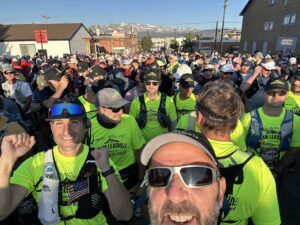
For Jason Evers, service didn’t end when he took off the uniform. It simply changed form. He grew up in a military family, so the path into the Army was never a question as much as a direction. After attending Gonzaga University through ROTC, he was commissioned as an Army engineer and began a career that would span 26 years and take him across the country and around the world. Along the way, there were assignments at Fort Hood and Fort Knox, multiple tours in Germany, and deployments to Iraq and Afghanistan. There was time spent teaching at West Point, investing in the next generation of leaders, and years spent in positions where the responsibility was both immediate and far-reaching. “I loved my time in the service,” Jason said. “I can’t imagine having done it any different.” What stayed with him most was the sense of purpose. The people, the mission, and the understanding that what you were doing mattered in a very real way.
When he retired in 2021, that didn’t disappear. It just looked different. Jason had stayed in touch with Tony Hofmann over the years. Tony, a retired Army engineer colonel and the founder of Team Leadville, created the all-volunteer running team to bring people together around a shared challenge while raising funds to help prevent veteran suicide. The race itself is part of the Leadville Race Series, owned by Life Time, which has helped expand its reach while preserving the spirit of the event. Tony had been both a leader and a mentor earlier in Jason’s career. He was also the one who first nudged Jason into running, encouraging him to take on his first marathon while they were stationed in Kansas City. That nudge stuck.
Over time, running became something Jason returned to, and so did the idea of Leadville. “I had always wanted to run the race,” he said. “So when I retired, I reached out and said, ‘I’m in next year.’” In 2022, he joined Team Leadville for the first time. This year will mark his fifth. Jason had already completed several marathons by the time he got to the race in Colorado, but Leadville introduced a different kind of challenge. The terrain, the elevation, and the altitude combine to create something that demands a different level of attention and respect. “There’s a pass — Mosquito Pass — that’s the highest point of the race,” he said. “I remember getting about halfway up and feeling like a load of bricks were on my chest.” It’s not the kind of race you can push through on effort alone. “You have to take a measured approach,” he said. “You have to manage your breathing and understand what your body can handle.” That first year was a lesson in adjustment. Each year since has brought its own set of challenges, but the experience never quite gets easier. And for Jason, the race itself is only part of the reason he keeps coming back.
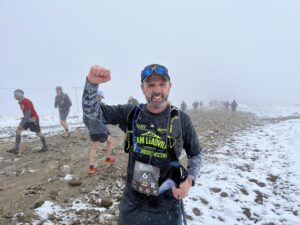
Over the course of his military career, he saw firsthand the weight that service can carry. Not always in ways that are visible, but in ways that stay with people long after they return home. “For a lot of us, we’ve seen peers and subordinates fight through those battles,” he said. “And unfortunately, some of them take their lives.” That reality sits at the center of his commitment to Team Leadville. “I think that’s the biggest draw,” he said. “If what we do can impact even just a handful of people, it’s well worthwhile.” Through the team, runners raise both funds and awareness in support of efforts to prevent veteran suicide. For many, including Jason, it’s also a way to remain connected to the military community and continue showing up for others. “The more we can get this issue in front of people, the better,” he said. “It’s not going away.”
That perspective is part of what drew him to Boulder Crest Foundation, the organization Team Leadville now supports. What stood out most to him was the way Boulder Crest extends its work beyond the individual. “The ability to include the family and help them grow as well — that’s really important,” he said. “It sets Boulder Crest apart.” For Jason, that resonates on a personal level. His own family is deeply connected to service. His children and their spouses have served across branches, including the Air Force, Army and Army National Guard, and many of them have taken part in the Leadville race as well. “It’s been a family affair,” he said. That same sense of connection extends across the team. While the mission brings people in, it’s the shared experience that keeps them coming back.
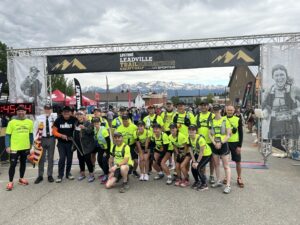
Each year looks a little different, with new runners joining and others returning, often bringing friends or family along with them. For those who have been through it before, there’s also an opportunity to support others in a different way. “You can help them prepare,” Jason said. “Share what’s worked and help them get ready for what’s coming.” It creates a sense of continuity that stretches beyond a single race and into something more lasting. Jason is no longer on active duty, but the mindset that shaped his career hasn’t gone anywhere. The desire to serve, to stay connected, and to contribute where it matters most continues to guide how he shows up. And each year, on a course that tests every part of you, he returns. Not because it’s easy. Not because it gets easier. But because the mission is still there — and so is he.
As part of Team Leadville’s efforts, the team selected Boulder Crest Foundation as the beneficiary of its 2026 event fundraising, supporting work focused on preventing veteran suicide and strengthening the military and first responder community.
Boulder Crest delivers peer-led training programs for veterans, service members, and first responders, grounded in the science and practice of Posttraumatic Growth and offered at no cost to participants. To learn more or support the foundation, visit bouldercrest.org.